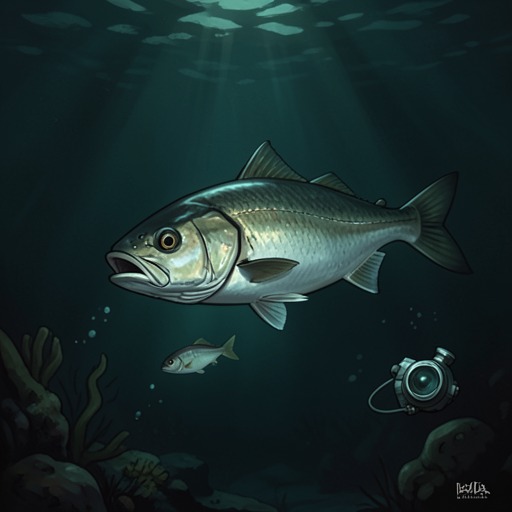
Pilot Fish Metaphor for Guiding the Rich
A Moveable FeastThe Pilot Fish Metaphor for Guiding the Rich turns a social intermediary into a guide who makes wealthy newcomers seem welcome while steering them toward people and work they might otherwise overlook. Its central irony is that trust travels in one direction: The rich rely on the guide, but the people who trust him are the ones left vulnerable when he moves on.
The Intermediary’s Manner
The pilot fish is introduced as someone who goes ahead of The rich, carrying an air of friendliness and hesitation. He may seem a little deaf or blind, but these apparent limitations accompany an exceptional ability to navigate social relationships. His speech is full of qualification and reassurance: he insists that he genuinely likes both people under discussion, urges Ernest Hemingway not to be difficult, and promises that Hemingway will like the man once he knows him. The maneuver makes advocacy sound like affectionate candor rather than persuasion.
The figure’s effectiveness depends on appearing unthreatening. The rich trust him because he is shy, comic, elusive, and already in production; above all, he is an unerring guide to the people and circumstances they are approaching. These qualities make his mediation feel personal and harmless, even as it helps determine who receives their attention and confidence.
Bringing The Rich In
The pilot fish’s arrival precedes the arrival of The rich. The narrator explains that, a year earlier, the wealthy newcomers would not have come: there was no novel to certify the work, and they did not spend their time or charm on uncertain prospects. Once the novel existed, the pilot fish supplied the assurance they needed. His presence also made the newcomers seem less like outsiders and helped ensure that Hemingway would not resist them.
The metaphor therefore describes more than a friendly introduction. The pilot fish converts literary recognition into access, carrying confidence from one social world into another. His own friendship with the narrator lends the approach credibility, while his praise and assurances make the newcomers’ attention feel like a festival rather than an intrusion.
Trust, Departure, and Profit
The guide does not remain. He is always going somewhere or arriving from somewhere, and his movement carries him in and out of politics, theater, countries, and other people’s lives. He is never caught by The rich; instead, the people who trust him are the ones who become vulnerable. The metaphor’s sharpest reversal is that the intermediary can be close enough to inspire confidence without staying to bear the consequences of that confidence.
His social agility is linked to a difficult early training and a long-denied love of money. He eventually becomes rich himself, moving, in the narrator’s striking formulation, a dollar’s width to the right with every dollar he makes. The image makes accumulation seem incremental: each gain shifts his position toward the class whose passage he once facilitated.
Critical Force of the Metaphor
The pilot fish exposes the weakness in treating charm as proof of goodwill. Shyness, humor, and apparent uncertainty do not prevent the guide from exercising influence; they help make that influence acceptable. The rich trust him because he seems harmless and discerning, while the people he brings within their reach may mistake his personal warmth for protection.
The metaphor’s warning rests on its contrast between mobility and exposure. The intermediary can leave, the newcomers can pass through, and those who trusted the arrangement remain to face its effects. By making the guide both socially useful and self-enriching, the narrator presents access itself as a form of power—and trust, when unsupported by lasting loyalty, as a risk.